Is a €1,500 ring expensive? A look behind the scenes
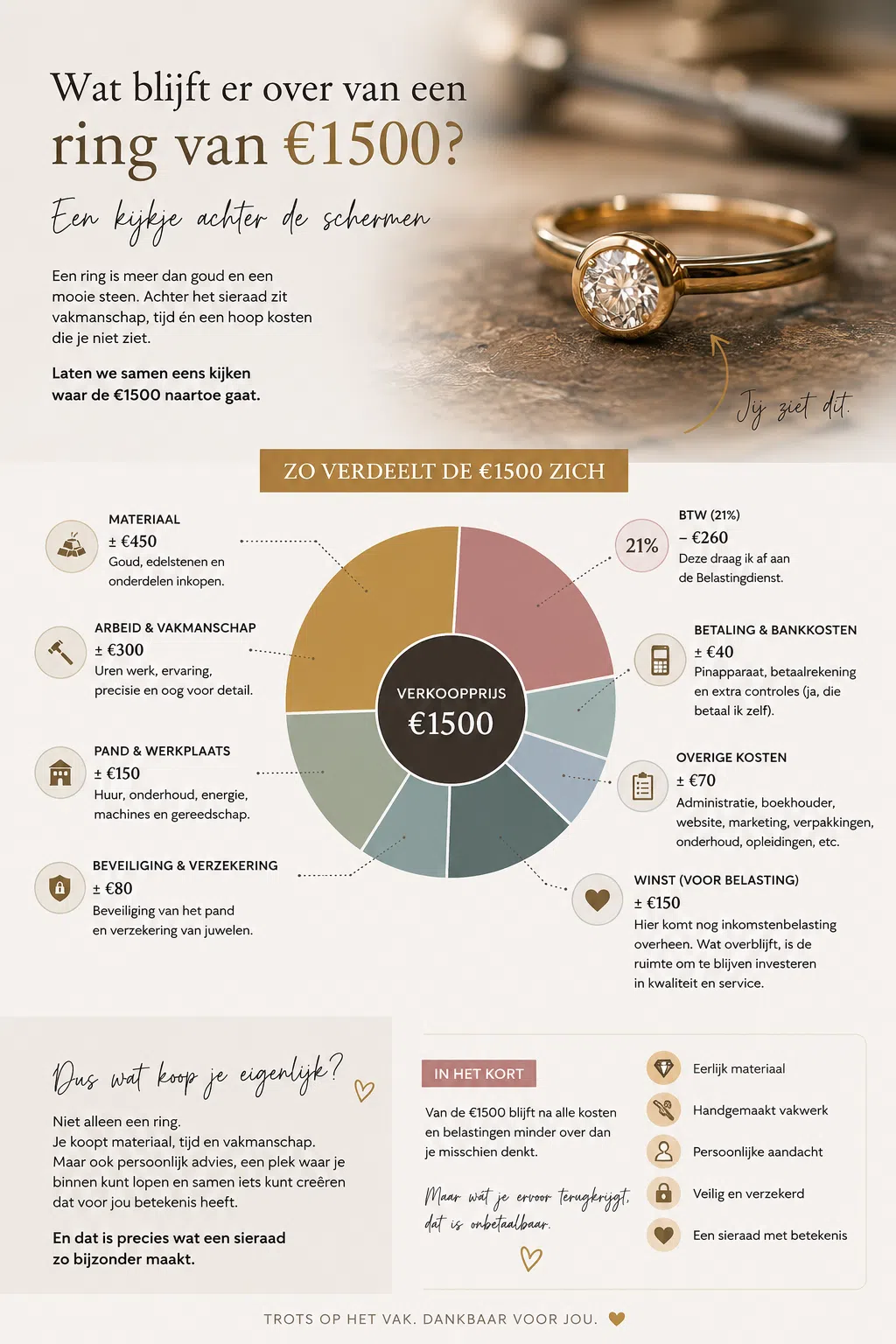
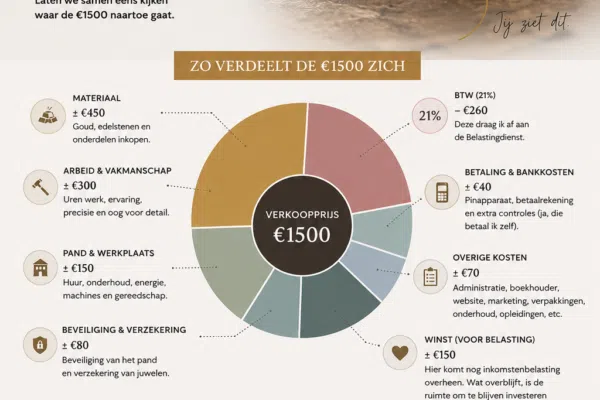
When you buy a ring for €1,500, you mainly see the end result: gold, a stone, a beautiful design. What you usually don’t see is everything that goes into it beforehand. That’s ultimately what determines the price, and that’s exactly why it’s interesting to take a look behind the scenes.
From gold to a ring
It all starts with the materials. Gold, gemstones, and other components are carefully sourced, with the current high price of gold playing a particularly significant role. Then the crafting process begins: sawing, filing, soldering, setting, and finishing. This is not a job that can be done “in a flash,” but a process that requires time, concentration, training, and experience. Everything is assembled by hand and must be technically and visually sound. That, too, comes at a price. Due to the high price of gold, the balance is shifting: materials are becoming more expensive, while the margin for labor is shrinking. For more expensive jewelry, the ratio of material costs to labor costs shifts even further due to rising material costs.
The place where it all happens
Then there’s the place where it all happens. A workshop with machines and tools, but also a store where you can walk in, try things on, and get advice. That comes with costs like rent, utilities, and maintenance. It’s a space that’s always there, even when there aren’t any customers inside at the moment.
Everything you don't see at first glance
In addition to the obvious expenses, there are also costs that often go unnoticed. These include security and insurance for both the premises and the jewelry. Even accepting payments isn’t free: there are costs associated with the card terminal and the business bank account. Furthermore, the jewelry industry is considered prone to fraud, which means additional checks are required—checks that, ironically, you as a business owner have to pay for yourself.
Taxes
Of the €1,500, 21% in VAT goes directly to the tax authorities. That amount is therefore not included in the remaining revenue. What remains after that is the amount before income tax is paid. What remains is not a “margin,” but the leeway needed to keep the business running and continue to invest.
And one more thing
In addition, there are ongoing expenses such as administrative costs, an accountant, the website, photography, packaging, machine maintenance, and the replacement of hand tools. Continuing professional development is also part of this.
So what are you actually buying?
Ultimately, you’re not just buying a ring. You’re buying materials, time, and craftsmanship—but also the chance to walk in, try something on, and collaborate on a design. It’s that whole experience that makes a piece of jewelry special. And maybe it also makes it more enjoyable to know what you’re looking at when you hold a handmade piece of jewelry in your hands!